
When winter arrives in McLean, VA, you may notice dry skin, chapped lips, static electricity, or a scratchy feeling in your nose and throat. You might also find that wood furniture seems to develop small cracks or that certain fabrics cling together more often. These changes can make your home feel less comfortable even when your heating system is keeping the temperature where you want it.
Winter dryness is often related to the amount of moisture in the outdoor air and how that air behaves after it enters a heated home. Your heating system can affect indoor comfort, but a furnace does not necessarily remove moisture from the air in the same way that an air conditioner or dehumidifier can. Understanding the relationship between outdoor conditions, indoor humidity, ventilation, and heating can help you determine what your home needs.
If the air in your home feels unusually dry throughout the heating season, checking the actual humidity level is a useful first step. Depending on the findings, the solution may involve a properly maintained humidifier, adjustments to moisture management, or an evaluation of the home’s heating and ventilation systems.
Is Dry Indoor Air Normal During a McLean Winter?
Yes. Indoor relative humidity often decreases during cold weather because cold outdoor air generally contains less moisture than warm air. When that outdoor air enters a home and is heated, its relative humidity falls unless additional moisture is introduced.
Relative humidity describes how close the air is to holding as much water vapor as it can at a given temperature. It is not the same as the total amount of moisture in the air. This distinction helps explain why outdoor air that does not feel especially dry can contribute to low relative humidity after it is brought indoors and warmed.
In a McLean home, the effect may be noticeable when the heating system runs regularly and outdoor temperatures remain low. However, not every home will experience the same degree of dryness. Air leakage, ventilation, household activities, building construction, and moisture sources all affect the final indoor humidity level.
The best way to know whether the air is actually too dry is to measure it rather than relying only on how your skin or throat feels.
Why Is the Air in My McLean, VA, Home So Dry in Winter?
Several factors can contribute to low indoor humidity, and they do not all involve a problem with the furnace.
Cold outdoor air is a major factor. When outside air enters through normal ventilation or air leaks and is heated indoors, its relative humidity decreases. During prolonged cold weather, this process can contribute to a dry indoor environment.
The amount of air entering and leaving the house also matters. Drafts around doors and windows, exhaust fans, and ventilation systems can affect how much outdoor air is introduced. Household activities such as cooking, showering, and drying clothes can add moisture, while a lack of adequate moisture sources may leave the home feeling drier.
The heating system influences indoor temperature and comfort, but the system’s role depends on its design and operation. If your home has a whole-house humidifier connected to the HVAC system, a maintenance issue or incorrect setting may also contribute to low humidity.
Identifying the reason for the dryness helps you choose a solution that addresses the actual condition instead of assuming the furnace is malfunctioning.
Can Running the Furnace Make My Home Feel Drier?
It can make existing dryness more noticeable. As the furnace warms indoor air, the air’s relative humidity decreases if its moisture content does not increase along with the temperature.
This does not mean that every furnace actively removes water from the air. A typical heating cycle raises the air temperature, which changes its relative humidity. Moisture levels can also be influenced by outdoor air entering the home, ventilation, and the presence or absence of a humidifier.
You may notice the difference most when the furnace runs frequently during a cold spell. The house becomes warmer, but your skin, lips, and nasal passages may feel drier if indoor humidity is low.
If the dryness is persistent, measure indoor humidity and check whether a humidifier is installed and operating as intended. A heating technician can inspect HVAC-connected humidification equipment, while a humidity measurement can help establish whether the problem is actually low indoor moisture rather than another source of discomfort.
How Can I Tell Whether My Home’s Humidity Is Too Low?
A simple humidity gauge, known as a hygrometer, can measure the relative humidity inside your home. Place it in a representative living area and allow it to provide a reading under normal household conditions.
The U.S. Environmental Protection Agency recommends keeping indoor relative humidity generally between 30% and 50%. However, during very cold weather, the appropriate level for a particular home may need to be lower to prevent condensation on cold windows and other surfaces. Building conditions and outdoor temperatures matter when choosing a target.
Possible signs of low humidity include static electricity, dry skin, chapped lips, irritated nasal passages, and discomfort that becomes more noticeable during the heating season. These symptoms are not proof of low humidity on their own, so measuring the air is more useful than guessing.
If the gauge shows low humidity, consider whether a humidifier could help. If the reading is already within a reasonable range, increasing moisture may not address the real source of discomfort.
Can a Whole-House Humidifier Help With Winter Dryness?
A whole-house humidifier can help raise indoor humidity by adding moisture to the air moving through the HVAC system. Depending on the design, the unit may be integrated with the furnace or air handler and controlled by a humidistat or other system settings.
The benefit is that moisture can be distributed through the home’s ductwork rather than being added only to one room. However, the actual performance depends on the humidifier’s capacity, the size and characteristics of the home, the HVAC system, the moisture demand, and how the equipment is maintained.
If your home already has a whole-house humidifier but the air still feels dry, check the manufacturer’s operating instructions and confirm that the control is set appropriately. Some systems require seasonal adjustments or maintenance before the heating season.
Do not assume that installing a humidifier will solve every comfort issue. If humidity levels are already adequate, or if dryness has another cause, adding moisture may not produce the improvement you expect. A technician can evaluate the existing equipment and determine whether service or a different approach is appropriate.
Why Is My Whole-House Humidifier Not Adding Enough Moisture?
If a humidifier is installed but indoor humidity remains low, several issues may be worth checking. The humidifier may be switched off, its control may be set too low, or the unit may need maintenance according to the manufacturer’s schedule.
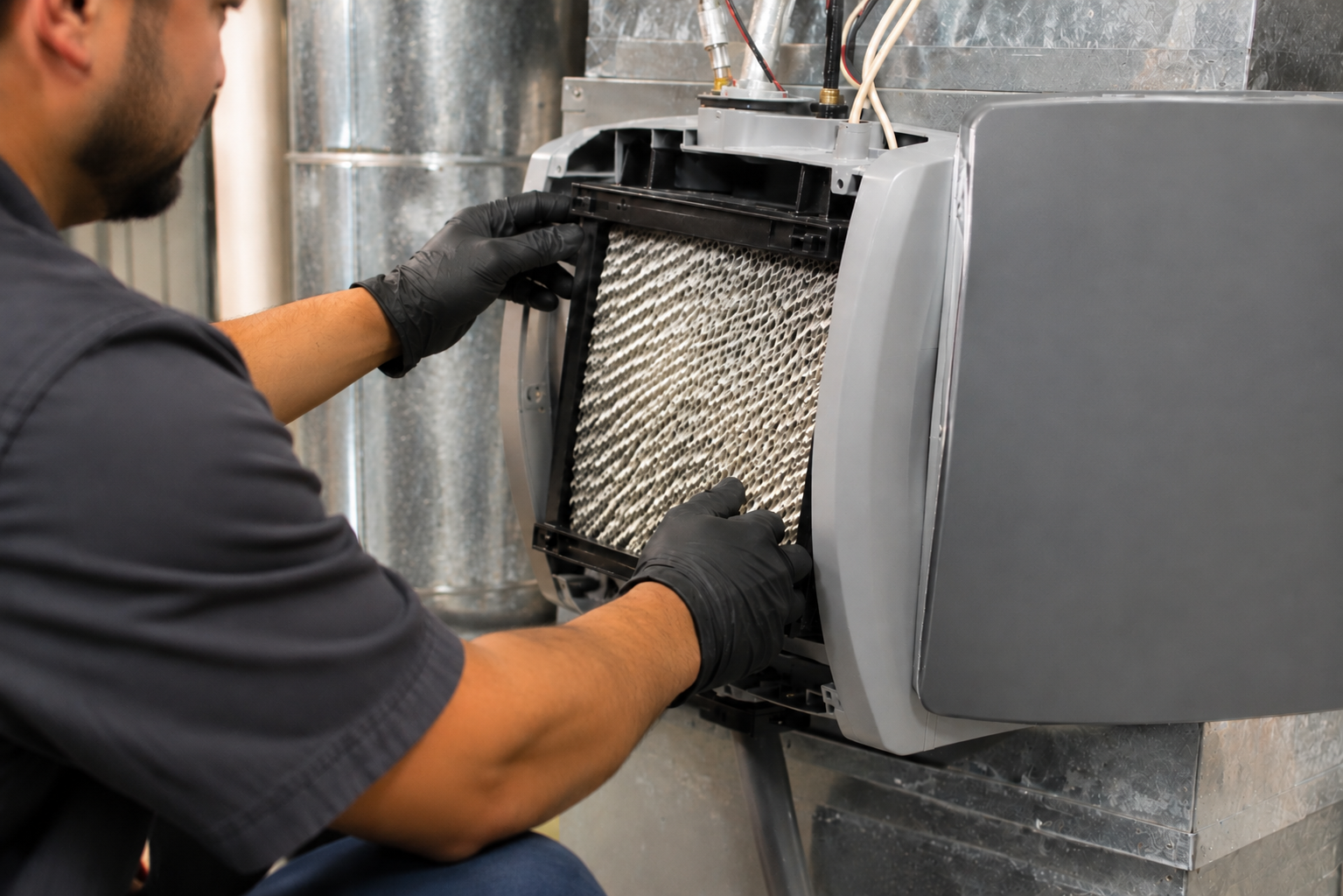
Some systems use replaceable water panels, pads, or other components that must be maintained or replaced as specified by the manufacturer. Mineral deposits or a problem with the water supply can affect certain humidifier designs. Other units may have control, wiring, or installation issues that require professional attention.
Start by checking the settings and consulting the equipment manual. Do not remove covers or attempt repairs involving electrical connections or water-control components unless the manufacturer specifically permits the task and you are qualified to perform it.
If the controls appear correct but humidity remains low, professional heating service can help determine whether the humidifier is operating properly and whether the HVAC system requires attention.
Can Air Leaks and Drafts Contribute to Dry Indoor Air?
Yes. Outdoor air can enter through gaps around doors, windows, penetrations, and other parts of the building envelope. During cold weather, that incoming air may have a low moisture content, and warming it indoors reduces its relative humidity.
Air leakage can also make rooms feel uncomfortable because of drafts and uneven temperatures. A room near a leaky window may feel colder than the rest of the house even when the thermostat setting is unchanged.
Check for obvious drafts around accessible doors and windows, and consider weatherstripping or other appropriate air-sealing improvements. Be careful not to block required ventilation openings or interfere with the safe operation of fuel-burning appliances.
Air sealing can improve comfort, but it does not replace the need for appropriate ventilation. If dryness continues despite addressing obvious drafts, measuring humidity and reviewing the home’s ventilation and humidification setup can help identify the next step.
Can My HVAC System Cause Uneven Humidity From Room to Room?
Humidity can vary throughout a home because rooms differ in temperature, exposure to outdoor conditions, air movement, and moisture sources. A sunny room, a room with exterior walls, and an interior room may not experience the same conditions.
The HVAC system can influence how air moves between spaces, but the system does not necessarily control humidity equally in every room. Duct layout, airflow balance, closed interior doors, and the location of a humidifier or humidity sensor can affect the distribution of conditioned air.
If one bedroom feels much drier than the rest of the house, compare the room’s temperature and humidity with readings from another area. Make sure supply and return registers are not obstructed, and note whether the room has drafts or unusually cold exterior surfaces.
If the difference persists, an HVAC technician can evaluate airflow and system operation. A building professional may also be needed if the problem appears related to insulation, air leakage, or other parts of the home’s construction.
Should I Use a Portable Humidifier in My Bedroom?
A portable humidifier can be useful when dryness is most noticeable in a bedroom or another frequently occupied room. Unlike a whole-house unit, it adds moisture primarily to the surrounding area, so its effectiveness depends on the device’s capacity, room size, ventilation, and operating conditions.
Choose a unit suited to the space and follow its operating and cleaning instructions. The EPA recommends emptying and drying portable humidifiers daily before refilling them, following the manufacturer’s directions, and cleaning the equipment regularly. Some cool-mist models can disperse minerals or microorganisms if they are not maintained properly.
Measure humidity rather than running the humidifier continuously without monitoring the result. The EPA advises against raising indoor relative humidity above 50%, and condensation on windows or walls is a sign that the moisture level may be too high for the conditions.
If the area around the unit becomes damp, lower the output or reduce use. Excess moisture can encourage mold and dust mites, so the goal is balanced humidity rather than making the air as moist as possible.
Can Too Much Humidity Be a Problem in Winter?
Yes. Although dry air can be uncomfortable, excessive indoor moisture can create its own problems. Water vapor may condense on cold windows, exterior walls, or other surfaces, especially during cold weather.
Persistent condensation can contribute to moisture damage and conditions that support mold growth. High humidity may also encourage dust mites and other indoor biological contaminants.
The appropriate humidity setting depends partly on outdoor temperature and the building’s ability to manage moisture. A level that causes no condensation during mild weather may be too high when outdoor temperatures fall sharply.
Use a hygrometer to monitor indoor humidity and watch for recurring moisture on windows or walls. If condensation develops, lower the humidifier setting or reduce its use. If moisture problems persist, investigate the source rather than relying solely on the humidifier control.
What Can I Check Before Calling for HVAC Service?
Begin by measuring the indoor relative humidity with a hygrometer. Take readings in the areas where the dryness is most noticeable and compare them with another part of the home.
If your home has a whole-house humidifier, check whether its control is on and review the manufacturer’s instructions for seasonal settings and maintenance. If you use a portable humidifier, make sure it is appropriately sized for the room and cleaned according to its instructions.
Look for obvious drafts around accessible windows and doors, and make sure HVAC registers are not obstructed. Note whether the dryness appears throughout the house or is concentrated in a particular room.
Avoid adjusting the furnace’s internal settings or attempting electrical or plumbing repairs on HVAC-connected equipment. If humidity remains low despite basic checks, a professional can inspect the humidification equipment and evaluate whether the HVAC system is contributing to the comfort problem.
Should I Turn Up the Thermostat to Fix Dry Air?
Increasing the thermostat setting is not a reliable way to correct low indoor humidity. Heating the home to a higher temperature can lower relative humidity further if the amount of moisture in the air remains unchanged.
If your home feels dry, increasing the temperature may make the space warmer without addressing the underlying humidity level. It can also increase heating demand.
A better first step is to measure the relative humidity and determine whether the home would benefit from a properly maintained humidifier. You can also review drafts, ventilation, and any existing humidity controls.
Keep the thermostat at a comfortable setting rather than using temperature changes as a substitute for humidity management. If your HVAC system includes humidification equipment that is not working as expected, arrange an inspection to identify the cause.
How Does a Technician Evaluate Winter Humidity Problems?
An HVAC technician can inspect a whole-house humidifier, review its controls, and check whether the equipment is operating as intended. Depending on the system, the evaluation may include checking the water supply, replaceable components, electrical connections, control settings, and the equipment’s integration with the heating system.
The technician can also review relevant heating-system operation and help determine whether a reported comfort issue may involve airflow or temperature differences rather than humidity alone.
Not every dry-air complaint requires an HVAC repair. A hygrometer reading may show that the humidity is already within a reasonable range, or the main issue may involve air leakage, ventilation, or another building condition. In those cases, additional investigation may be more appropriate than replacing HVAC equipment.
The goal is to identify the source of the discomfort and recommend a solution that balances humidity, ventilation, and safe system operation.
Can Winter Dryness Be Fixed Without Replacing My Heating System?
In many cases, yes. Low indoor humidity does not automatically mean that a furnace or heat pump needs to be replaced.
Depending on the situation, the appropriate solution may involve maintaining an existing humidifier, correcting a control setting, adding a suitable humidification system, or addressing drafts and other building conditions. If the humidity reading is already appropriate, the best solution may involve investigating another cause of the discomfort.
Major equipment replacement should not be the first recommendation based only on dry skin, static electricity, or a low humidity reading. A proper evaluation helps establish whether the problem involves the heating equipment, humidifier, ventilation, or the building itself.
Choosing the right solution can improve winter comfort without making unnecessary changes to a heating system that may otherwise be operating normally.
Looking for Heating Service in McLean, VA?
If the air in your McLean home feels unusually dry during winter, start by checking the indoor humidity level. Cold outdoor air, air leakage, ventilation, and the operation of an existing humidifier can all influence indoor comfort.
Winds of Valley Heating & Cooling provides professional heating and HVAC services in McLean, VA, and surrounding Northern Virginia communities. If your home has a whole-house humidifier that is not working as expected, or you suspect an HVAC-related comfort problem, a technician can inspect the relevant equipment and recommend the appropriate service.
Schedule HVAC Service in McLean, VA
Dry indoor air is common during cold weather, but the right response depends on the home’s actual humidity level and the conditions contributing to the problem. Measuring humidity, checking existing controls, and maintaining humidification equipment are useful starting points.
Winds of Valley Heating & Cooling provides heating services and HVAC services in McLean and nearby Northern Virginia communities. If you need help evaluating a whole-house humidifier or another HVAC-related comfort issue, contact Winds of Valley to request service.
Frequently Asked Questions About Dry Indoor Air in Winter
What is a reasonable indoor humidity level during winter?
The EPA generally recommends indoor relative humidity between 30% and 50%. During very cold weather, a lower setting may be necessary to limit condensation on windows and other cold surfaces. A hygrometer can help you monitor the actual level in your home.
Does a furnace remove moisture from the air?
A typical furnace primarily heats air rather than actively removing moisture from it. When air is warmed without additional moisture, its relative humidity decreases. Outdoor air entering the home and other moisture conditions also influence indoor humidity.
Why do I get more static electricity when my heat is running?
Static electricity often becomes more noticeable when indoor humidity is low. Winter weather and heated indoor air can contribute to those conditions, although fabrics, flooring, and other factors also influence static buildup.
Can a whole-house humidifier help with dry skin and chapped lips?
A humidifier can raise indoor humidity, which may help relieve discomfort associated with dry air. However, skin or respiratory symptoms can have other causes, so improved humidity does not guarantee that every symptom will disappear.
How often should I clean a portable humidifier?
Follow the manufacturer’s cleaning and maintenance instructions. The EPA recommends emptying, drying, and refilling portable humidifiers daily and cleaning them regularly to reduce the potential for microorganism growth and mineral buildup.
Who can inspect a whole-house humidifier in McLean, VA?
Winds of Valley Heating & Cooling provides heating and HVAC services in McLean and surrounding Northern Virginia communities. A technician can inspect compatible HVAC-connected humidification equipment and help determine whether service is needed.
Contact Us Today! Get in touch with us for expert service and support—fill out the form, and we’ll reach out soon!