
Choosing between a tank vs. tankless water heater in Springfield, VA involves more than deciding which type of equipment is newer or more efficient. The right water heater depends on your household’s hot water demand, available space, existing plumbing and utilities, installation requirements, and how your family typically uses hot water throughout the day.
Traditional tank water heaters and tankless systems can both provide dependable hot water when they are properly selected, sized, and installed. However, they operate differently, and those differences can affect everything from available hot water and equipment space to installation complexity and long-term maintenance.
Winds of Valley provides water heater services throughout Northern Virginia, including Springfield, and can help homeowners compare traditional tank and tankless options based on their property and hot water needs.
How Does a Traditional Tank Water Heater Work?
A traditional water heater heats water and stores it in an insulated tank until someone in the home needs it. When you turn on a shower, faucet, dishwasher, or another fixture that requires hot water, heated water leaves the tank and is replaced by incoming cold water. Tank water heaters are familiar to many Springfield homeowners and can be a practical replacement when a home already has the necessary plumbing, electrical or gas connections, and space for the equipment. One important consideration is capacity. Because the system stores a limited amount of hot water, households with significant simultaneous demand can potentially use hot water faster than the system can recover. Proper sizing therefore matters when choosing a replacement.
How Does a Tankless Water Heater Work?
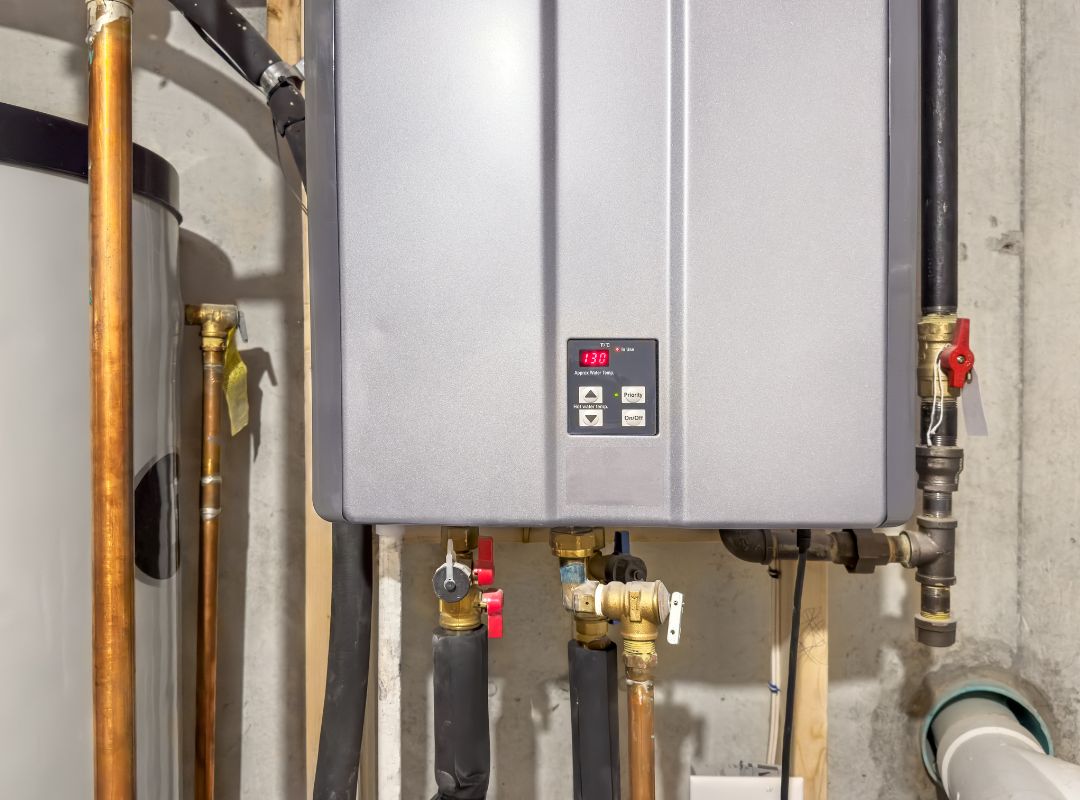
A tankless water heater does not maintain a large storage tank of heated water. Instead, the equipment heats water as it passes through the system when hot water is requested. This on-demand operation means homeowners are not continuously storing a tank of heated water. Tankless equipment is also typically more compact than a conventional storage water heater, which can be useful when available equipment space is limited.
However, “tankless” does not mean unlimited hot water under every circumstance. Every tankless system has a particular heating capacity and flow capability. If several showers, faucets, and appliances require hot water simultaneously, the system needs to be properly sized to handle that demand.
Which System Is Better for a Larger Household?
Household size is an important consideration, but the number of people living in the home does not tell the entire story. Consider when your household uses hot water. A family that regularly has several people showering while the dishwasher or washing machine is operating may have significantly different requirements from a household that spreads those activities throughout the day.
A properly sized tank water heater can provide substantial stored capacity for periods of high demand. A properly sized tankless system can provide continuous hot water, but its ability to serve multiple fixtures simultaneously depends on its flow rate and the amount of heating required. Instead of choosing equipment based only on household size, an installer should evaluate expected hot water demand and usage patterns.
Compare Space Requirements
Space can make a meaningful difference when comparing tank and tankless systems. Traditional water heaters require enough room for the storage tank and appropriate connections. If your current tank water heater already fits comfortably in a utility area, replacing it with a similar configuration may be relatively straightforward. Tankless systems are considerably more compact and are generally mounted on a wall. This can make them appealing when homeowners want to reclaim some floor space.
Space savings alone, however, should not determine your decision. Plumbing, venting, gas supply, electrical capacity, and other installation requirements also need to be considered before converting from one type of equipment to another.
Consider Energy Use and Efficiency
Energy efficiency is one reason many homeowners become interested in tankless water heaters. A traditional storage system needs to maintain the temperature of the water inside its tank so that hot water is ready when needed. Tankless systems heat water on demand, which can reduce energy associated with maintaining stored hot water.
That does not mean every Springfield homeowner will see the same reduction in utility costs after switching to tankless equipment. Actual energy use depends on household hot water consumption, equipment efficiency, fuel or electricity costs, system settings, installation, and other factors. When comparing systems, look at the efficiency specifications of the particular equipment being considered rather than assuming that one category will produce a specific amount of savings.
Compare Installation Requirements
Replacing an existing tank water heater with another compatible tank system can be different from converting the property to tankless equipment. A tankless conversion may require modifications to plumbing, venting, gas supply, electrical service, or other parts of the existing installation. What is necessary depends on the equipment and the home’s current configuration. These additional requirements can affect both installation complexity and upfront cost.
That is why a professional evaluation is particularly important before deciding to switch technologies. An installer should examine the existing setup and explain what modifications would be required rather than providing a recommendation based only on the water heater itself. Winds of Valley provides professional water heater installation and replacement services and can evaluate whether a traditional or tankless configuration is appropriate for your Springfield home.
Think About Upfront Cost and Long-Term Value
Price is understandably an important consideration when choosing a water heater, but comparing only the purchase price can give an incomplete picture. Homeowners should consider the equipment, installation requirements, potential modifications, expected maintenance, efficiency, warranty coverage, and how well the system meets the household’s hot water needs.
Tankless systems may involve a higher initial investment, particularly when converting a home that was originally configured for a storage tank. A conventional tank system may involve a simpler installation when replacing similar existing equipment. The better value depends on the property and the homeowner’s priorities rather than one system automatically being the less expensive choice in every situation.
Winds of Valley also offers financing options for qualifying homeowners who want to explore payment options for eligible home-comfort projects.
Don’t Forget About Water Heater Maintenance
Both tank and tankless water heaters require appropriate care. Maintenance requirements vary according to the equipment, water quality, usage, manufacturer recommendations, and installation. Sediment and mineral accumulation, for example, can affect water-heating equipment over time. A tankless system should not be considered maintenance-free simply because it does not store water in a large tank. Likewise, a traditional tank water heater should not be ignored until it stops producing hot water.
Professional inspection and manufacturer-recommended maintenance can help homeowners understand the condition of their equipment and identify certain developing concerns.
Which Water Heater Is Right for Your Springfield Home?
There is no single water heater that is automatically best for every home. A traditional tank water heater may make sense if you want a familiar system, have appropriate installation space, and already have a compatible setup. It may also provide a more straightforward replacement when the existing tank reaches the end of its useful service life. A tankless system may be worth considering if space is important, you prefer on-demand water heating, or you are already planning improvements that make conversion practical.
The decision should ultimately be based on your household’s hot water demand, available utilities, property configuration, installation requirements, budget, and long-term plans for the home.
Why Professional Water Heater Sizing and Installation Matter
Even a high-quality water heater may disappoint if it is incorrectly sized or installed. For tank systems, storage capacity and recovery capability need to be appropriate for household demand. For tankless systems, flow rate and required temperature rise are important considerations.
Installation also involves plumbing and, depending on the system, electrical connections, gas supply, venting, drainage, and safety components. These are reasons to have the property and proposed equipment professionally evaluated. A qualified installer can explain why a particular system is being recommended, what installation work will be necessary, and how the equipment should be maintained after installation.
Choosing Between Tank and Tankless Water Heaters in Springfield, VA
The decision between a traditional tank and tankless water heater should begin with your home rather than with assumptions about which technology is better.
Consider how much hot water your household uses, when that demand occurs, how much equipment space is available, what utilities are already in place, and whether modifications would be necessary. Then compare installation requirements, efficiency, maintenance, and long-term value.
Winds of Valley provides water heater installation, replacement, repair, and related home-comfort services throughout Northern Virginia. Homeowners comparing a tank vs. tankless water heater in Springfield, VA can schedule an evaluation to determine which type and size of equipment makes sense for their property.
Visit the Winds of Valley water heater service page to learn more or schedule an appointment.
Frequently Asked Questions About Tank vs. Tankless Water Heaters in Springfield, VA
Is a tank or tankless water heater better?
Neither system is automatically better for every home. Traditional tank and tankless water heaters have different installation requirements, operating characteristics, and costs. The better choice depends on household demand, available space, existing utilities, budget, and other property-specific factors.
Does a tankless water heater provide unlimited hot water?
A properly sized tankless system can continue heating water while there is demand, but every unit has a maximum heating and flow capacity. If simultaneous hot water demand exceeds that capacity, performance can be affected.
Is a tankless water heater more energy efficient?
Tankless systems can reduce energy associated with maintaining a stored supply of hot water. However, actual household energy use and savings depend on the specific equipment, hot water consumption, energy prices, system settings, and other factors.
Can I replace my tank water heater with a tankless system?
In many homes, conversion is possible, but additional plumbing, venting, gas, or electrical work may be required. A professional evaluation can determine what modifications would be necessary for your particular home.
Which water heater is better for a large family?
The answer depends on how much hot water the household uses and how much is needed simultaneously. A properly sized storage tank can provide significant stored capacity, while an appropriately sized tankless system can handle continuous demand within its rated capabilities.
Do tankless water heaters need maintenance?
Yes. Tankless water heaters have maintenance requirements just as traditional water heaters do. The appropriate maintenance depends on the equipment, water quality, usage, and manufacturer recommendations.
Who installs tank and tankless water heaters in Springfield, VA?
Winds of Valley provides traditional and tankless water heater services for homeowners in Springfield and throughout Northern Virginia. A professional evaluation can help determine which type of water heater and equipment size are appropriate for the household.