
If you’re replacing your water heater in Falls Church, VA, you may wonder whether an expansion tank is necessary, especially if your current water heater doesn’t have one. Although expansion tanks are common in residential plumbing systems, not every water heater installation requires one. The answer depends on how your home’s water supply is configured and whether heated water can expand without creating excessive pressure.
Your water heater likely needs an expansion tank or another approved thermal-expansion control device if your home has a closed plumbing system. This occurs when a check valve, pressure-reducing valve, or backflow preventer stops expanded water from flowing back toward the main water supply. Under Virginia’s plumbing code, thermal-expansion control is required for certain storage water heater installations with these components. A professional plumber can inspect your home’s plumbing system and determine whether an expansion tank is needed.
How Can I Tell If My Water Heater Needs an Expansion Tank?
The first step is determining whether your home has an open or closed plumbing system. In an open system, expanding water may flow backward toward the public water supply as the water heater heats it. In a closed system, plumbing components prevent this reverse flow, allowing pressure to increase as the water expands. Understanding the difference can help Falls Church homeowners recognize when thermal-expansion control may be necessary.
Your water heater may need an expansion tank if:
- Your home has a pressure-reducing valve. This component regulates incoming water pressure and may prevent expanded water from returning to the main supply.
- A check valve is installed. Check valves prevent water from flowing backward, which can create a closed plumbing system.
- Your plumbing includes a backflow preventer. These devices protect the drinking water supply but can also prevent thermal expansion from dissipating.
- Your water pressure increases after heating cycles. Noticeable pressure increases may indicate that expanding water has nowhere to go.
These conditions can indicate a need for thermal-expansion control, but they do not automatically establish that a separate expansion tank is the only acceptable solution. A qualified plumber can identify the relevant plumbing components, evaluate water pressure, and determine whether the installation requires additional pressure-control equipment.
Why Does a Water Heater Need an Expansion Tank?
Water naturally expands when heated. In a conventional storage water heater, cold water enters the tank and increases in temperature, causing its volume to increase. If the plumbing system allows water to flow back toward the main supply, the expanded water may have somewhere to go. However, when a check valve, pressure-reducing valve, or backflow preventer blocks reverse flow, the additional volume can increase pressure inside the water heater and household plumbing.
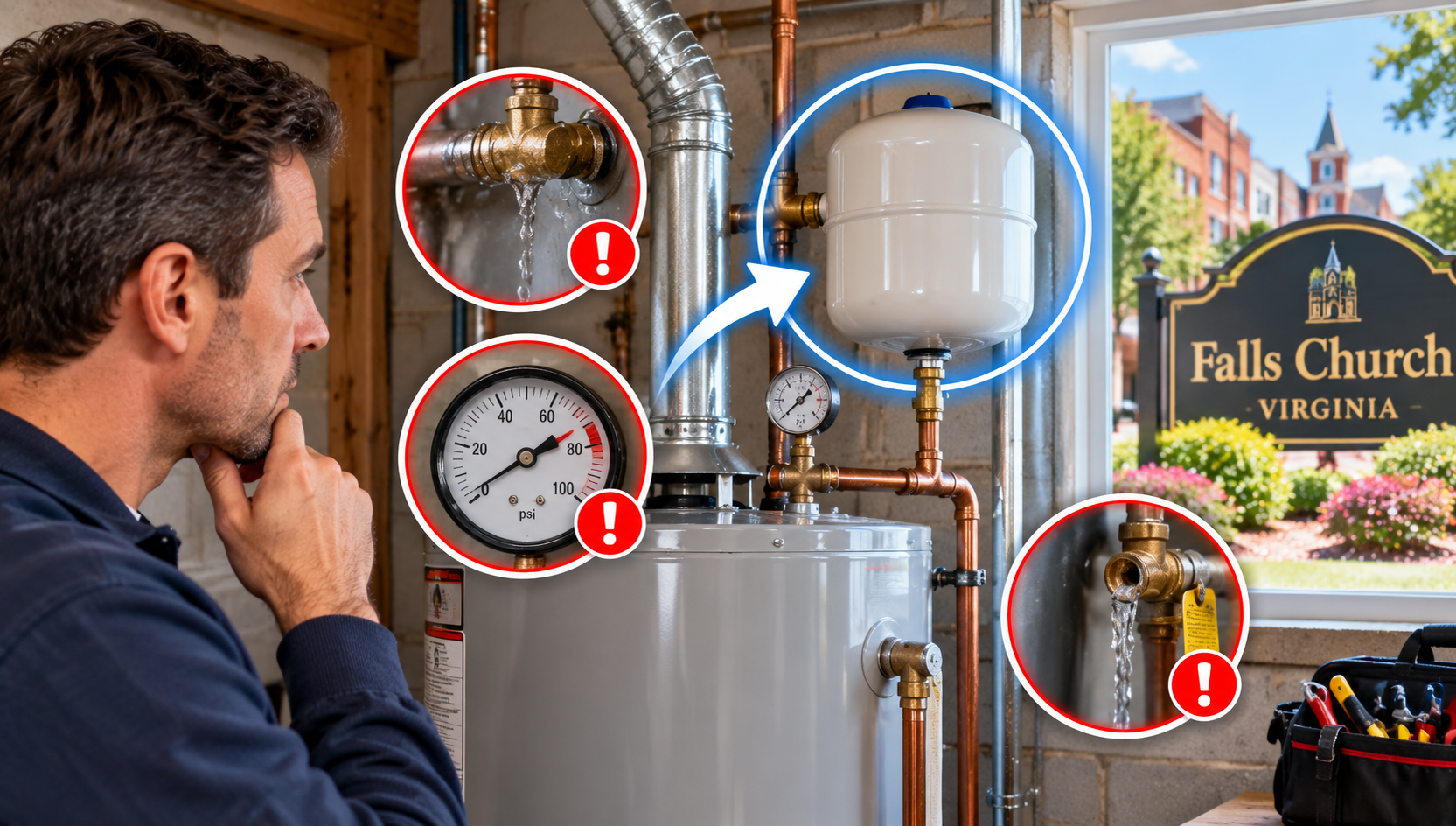
An expansion tank provides space to accommodate this increased water volume. Most residential thermal expansion tanks contain a flexible diaphragm or bladder that separates water from a pressurized air chamber. As water expands, the air compresses, helping limit pressure increases and reducing unnecessary stress on plumbing components. Properly sized and installed expansion tanks help manage these pressure changes during normal water heater operation.
What Are the Warning Signs That My Water Heater Needs an Expansion Tank?
A closed plumbing system does not always produce obvious symptoms. However, certain issues may indicate uncontrolled thermal expansion, particularly when water pressure rises during heating cycles. Recognizing these warning signs can help homeowners identify when professional plumbing inspection may be necessary.
Water Dripping From the Pressure Relief Valve
The temperature-and-pressure relief valve is an important safety component of a storage water heater. If pressure rises beyond its operating threshold, the valve may release water to help protect the equipment. Repeated dripping or discharge can indicate a pressure-related problem, although a faulty valve, excessive temperature, or other issues may produce similar symptoms.
Homeowners should never plug or block the relief valve to stop dripping. If the valve repeatedly releases water, a plumber should inspect the water heater, measure system pressure, and determine whether thermal expansion or another condition is responsible.
Water Pressure Fluctuates After Heating
If water pressure increases significantly after the water heater completes a heating cycle, thermal expansion may be contributing to the change. This can happen when expanded water cannot move backward through the supply piping and pressure builds within the closed system.
A plumber can compare pressure readings before and after heating to help identify the cause. These measurements can also reveal whether an existing expansion tank is functioning correctly or whether another pressure-control component requires attention.
Recurring Plumbing Leaks
Repeated pressure increases can place additional stress on plumbing connections, valves, and fixtures. Over time, excessive pressure may contribute to leaks or premature wear, particularly where components are already weakened or deteriorating.
Although plumbing leaks can develop for many reasons, recurring problems should not be ignored. Professional inspection can help determine whether water pressure, aging connections, or another plumbing issue is contributing to the damage.
Your Home Has a Closed Water Supply System
You do not need to experience leaks or pressure problems before thermal-expansion control becomes necessary. If your plumbing configuration meets the applicable code conditions, expansion control may be required even when the water heater appears to operate normally.
For Falls Church homeowners planning a replacement, checking the existing water supply configuration is an important part of determining which components belong in the new installation.
Does Virginia Plumbing Code Require an Expansion Tank?
Virginia’s plumbing code includes provisions addressing thermal expansion in storage water heater systems. Under the thermal-expansion requirements in the 2021 International Plumbing Code, Section 607.3, appropriate expansion control is required when the cold-water supply to a storage water heater passes through a check valve, pressure-reducing valve, or backflow preventer.
This requirement addresses excessive pressure increases caused by heated water expanding inside a closed plumbing system. Virginia does not automatically require a separate expansion tank for every water heater replacement. The applicable requirement depends on the plumbing configuration, and an approved thermal-expansion control device may be used where permitted by the governing code.
For homeowners in Falls Church, a plumber should evaluate the existing water supply and determine whether thermal-expansion control is needed before installing the replacement water heater. Working with an experienced plumbing professional helps ensure the installation is appropriate for the equipment and existing system.
Why Didn’t My Old Water Heater Have an Expansion Tank?
If your old water heater operated without an expansion tank, you might question why your plumber recommends one during replacement. The absence of an expansion tank does not necessarily mean that the original installation was appropriate for the home’s current plumbing configuration.
Several factors may explain the difference:
- Changes to the plumbing system: A pressure-reducing valve, check valve, or backflow preventer may have been installed after the original water heater.
- Different installation requirements: The previous water heater may have been installed under earlier requirements or before changes were made to the water supply.
- Previously overlooked pressure conditions: Thermal expansion may have existed without producing obvious symptoms.
- Evaluation during replacement: Installing a new water heater provides an opportunity to assess whether the replacement meets applicable plumbing requirements.
A water heater replacement should involve more than disconnecting the old equipment and connecting the new unit. The existing plumbing components and pressure conditions should also be evaluated to determine whether additional equipment is necessary.
Can I Check Whether My Water Heater Needs an Expansion Tank Myself?
Homeowners can look for certain clues, but determining whether thermal-expansion control is required usually involves inspecting the plumbing system. You can begin by checking whether an expansion tank is already installed near your water heater. It often appears as a smaller metal tank connected to the cold-water supply piping, although its exact location may vary.
You can also look for a pressure-reducing valve near the main water supply or ask whether your plumbing system includes backflow-prevention equipment. However, some components may be located in areas that are difficult to access or identify without plumbing experience.
A plumber can perform a more complete evaluation by:
- Identifying check valves, pressure-reducing valves, and backflow preventers.
- Measuring the home’s incoming water pressure.
- Checking whether pressure rises during a water-heating cycle.
- Inspecting any existing thermal-expansion control device.
- Determining the appropriate tank size and installation location if one is needed.
Professional plumbing services can help homeowners evaluate these conditions without making unnecessary modifications to the water heater or supply piping. Avoid adjusting pressure-control equipment or altering water heater safety components without the appropriate knowledge and equipment.
Where Should a Water Heater Expansion Tank Be Installed?
A thermal expansion tank is generally connected to the cold-water supply piping serving the storage water heater. Its location must allow it to accommodate expansion within the portion of the plumbing system isolated by the relevant check valve, pressure-reducing valve, or backflow preventer.
Proper installation requires more than selecting a convenient connection point. The expansion tank must be sized according to the water heater’s capacity, operating pressure, expected temperature changes, and manufacturer requirements. Its air precharge must also be adjusted appropriately, and the tank must be adequately supported.
An incorrectly sized or improperly installed expansion tank may not effectively manage pressure increases. A plumber should evaluate the available piping arrangement and follow applicable installation requirements to ensure the expansion tank can function as intended.
Do Tankless Water Heaters Need Expansion Tanks?
Tankless water heaters heat water as it flows through the equipment instead of storing a large volume of heated water. Because they operate differently from conventional storage water heaters, the same thermal-expansion requirements should not automatically be applied to every tankless installation.
However, some tankless systems include recirculation loops, storage components, or other configurations that may require thermal-expansion control. Whether an expansion tank is necessary depends on the system design, manufacturer instructions, and applicable plumbing requirements.
If you’re considering switching from a traditional storage water heater to a tankless model, have the existing plumbing configuration evaluated before installation. This helps determine which components may need to be retained, modified, or added.
What Should Falls Church Homeowners Know Before Replacing a Water Heater?
Before replacing a water heater in Falls Church, VA, homeowners should have the existing plumbing system evaluated rather than assuming the new installation will require exactly the same components as the old one. A professional inspection can identify whether a pressure-reducing valve, check valve, or backflow preventer makes thermal-expansion control necessary.
Homeowners should also confirm which local jurisdiction oversees their property. A Falls Church mailing address does not necessarily mean a home is located within the independent City of Falls Church. Some properties fall under Fairfax County or another jurisdiction, which may affect permitting and inspection procedures.
Before scheduling a water heater replacement, consider asking your plumber:
- Does my plumbing system require thermal-expansion control?
- Is there an existing expansion tank, and can it be reused?
- What size expansion tank would be appropriate for my water heater?
- Are permits or inspections required for the replacement?
- Will the installation include a water pressure evaluation?
These questions can help homeowners understand the proposed work and compare replacement estimates. If you’re planning plumbing improvements, you can also explore the services available through Winds of Valley to learn more about professional plumbing support in Northern Virginia.
Need Water Heater Service in Falls Church, VA?
If you’re unsure whether your water heater needs an expansion tank, having your plumbing system evaluated before making changes can help you avoid unnecessary equipment or overlooked pressure-control requirements. The appropriate solution depends on your home’s water supply configuration, water heater type, and applicable installation standards.
Winds of Valley provides plumbing and water heater services for homeowners in Falls Church and surrounding Northern Virginia communities. A professional can inspect your existing water heater, evaluate water pressure and plumbing components, and recommend an appropriate solution based on your home’s configuration.
Whether you’re replacing an aging water heater or investigating pressure-related plumbing problems, understanding the condition of your system is an important first step. Contact Winds of Valley to discuss your water heater needs and schedule professional service in Falls Church, VA.
Frequently Asked Questions About Water Heater Expansion Tanks
Do I need an expansion tank if my water heater works fine?
Possibly. A water heater may operate normally even when the plumbing configuration requires thermal-expansion control. The need for an expansion tank or another approved control device depends on the system’s design and applicable plumbing requirements, not simply whether visible problems are present.
How do I know if my home has a closed plumbing system?
A check valve, pressure-reducing valve, or backflow preventer can prevent water from flowing backward toward the main supply. A plumber can inspect these components and evaluate pressure changes to determine whether your plumbing system is closed and whether thermal-expansion control is necessary.
Can I install a water heater without an expansion tank in Falls Church, VA?
Yes, in some circumstances. Not every storage water heater installation requires a separate expansion tank. However, if the plumbing configuration requires thermal-expansion control, an appropriate approved device must be provided to address pressure increases caused by heated water.
Does an expansion tank fix high water pressure?
An expansion tank helps control pressure increases caused by thermal expansion, but it does not replace a pressure-reducing valve or correct every source of excessive incoming water pressure. If your home’s pressure is consistently high, a plumber should evaluate the water supply and existing pressure-control equipment to identify the underlying cause.
Can I reuse an existing expansion tank with a new water heater?
Sometimes. The existing expansion tank must be properly sized, in good condition, and compatible with the replacement installation. A plumber should check its condition, precharge pressure, and suitability before determining whether it can be reused.
Contact Us Today! Get in touch with us for expert service and support—fill out the form, and we’ll reach out soon!